Nothing But Datacenters
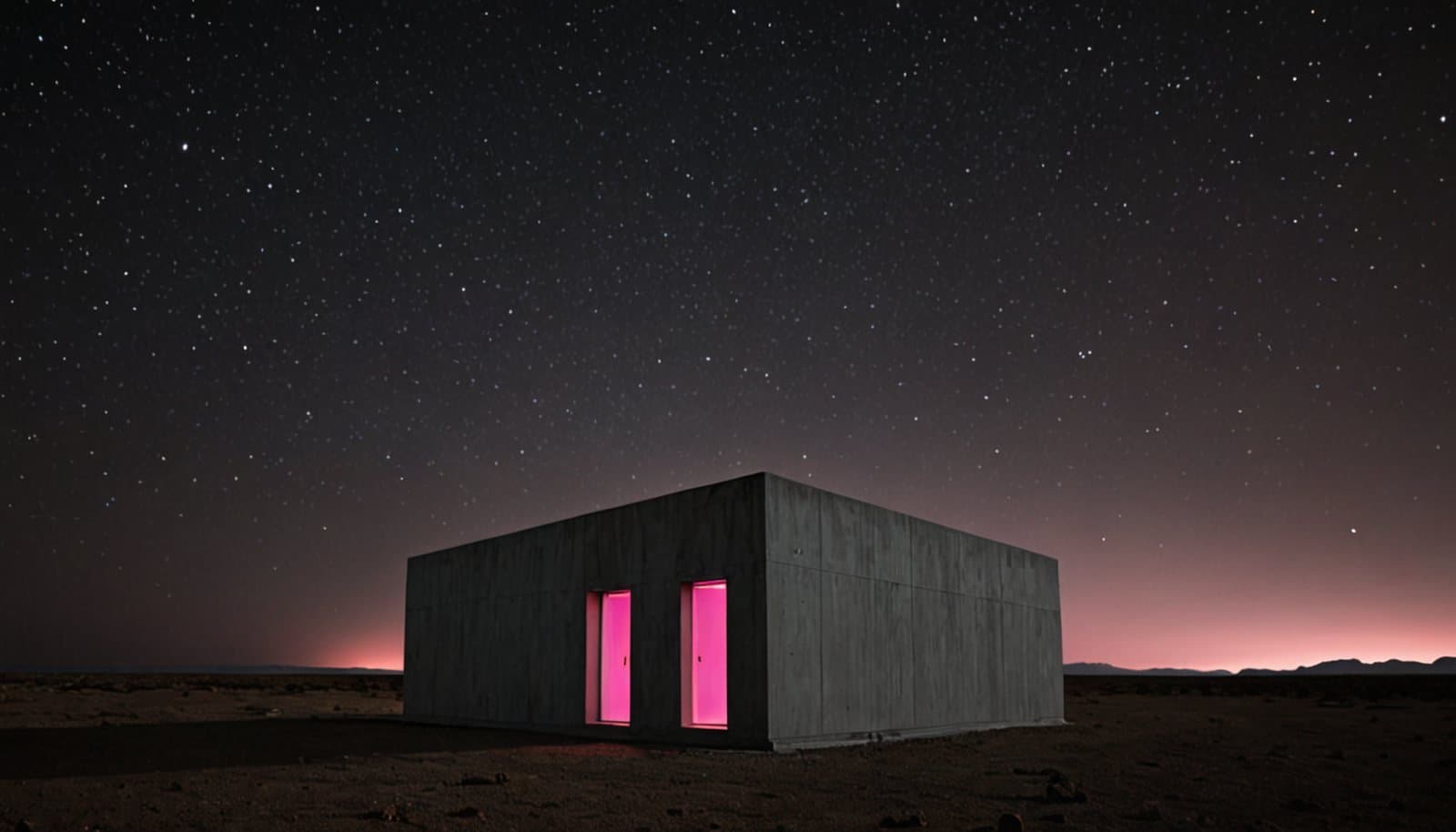
Two-channel generative video, 78:16, plus website, manual, credential and supply
PNW Arts & Tech Symposium, Cornish 9th Ave Gallery, Seattle, October 24–31, 2026
Nothing But Datacenters is a conceptual artwork in several parts. It is a fictional company that runs a facility no one is required to enter. The work is everything the facility produces: a two-channel generative video in which a datacenter imagines itself frame by frame, an operations manual written by a model that has never seen the building, a staff credential for personnel who are not required on site, and the supply sold to keep it running.
The industry describes these buildings as weightless, as a cloud. They are not. They take land, power and water, and they are sited by what they need, not by who lives nearby. Nothing But Datacenters takes the industry’s own pitch at its word and states it flatly, until the flatness becomes the critique.
The work is a company rather than a statement because the industry already has a voice, and it is a persuasive one: the product launch, the spec sheet, the maintenance manual. Calm, confident, certain the building is good for everyone. The facility speaks only in that voice, and it never breaks.
Wearing the supply makes you personnel. That is the last joke, and it isn’t one: every request, image and click is already work for a facility like this. The credential just puts your name on it.
The two-channel piece
The centre of the work, and what is on the wall at Cornish. It tells its story without a voice: no narration, no dialogue, only images holding one composition while the content inside it strobes. A server rack, a reactor dome, a field of vias, a chip, each takes the same frame for a moment and gives it to the next. The second channel is the text instruction each frame was made from, locked to the image frame for frame.
Every frame is generated from the one before it — a system fed its own output, slowly becoming itself. Like the Bechers’ typologies of water towers, set in time rather than on a grid, the sameness makes difference visible. There are no people; scale and absence carry the feeling. What the audience reads and what the model was told are not quite the same string: the image channel was conditioned on each line plus a suffix — empty, unmanned, deserted — that the text channel never shows. The depopulation instruction is present in every frame of the image and in none of the text.
The video above is the exhibition edit, pass-19e: 78 minutes 16 seconds, 112,708 frames per channel at 24 fps, image left and instruction right. Installed, each channel fills a 4K display on its side.
The other parts
The manual. The Operations and Maintenance Manual was written by the facility’s model, which has never seen the building. Its errors are left as drawn.
The credential. Every visitor can be issued personnel status, with a name on a staff card. The card grants no access.
The supply. The facility pays for itself — a tee, a lanyard, an onboarding package, a coloring book of 101 line drawings, every one of them a datacenter. Buying in makes you personnel.
Colophon
Made on one GPU. An image of a datacenter was fed back into an image model, each output becoming the next input, tens of thousands of times over.
Concept, direction and software: Reilly Donovan.
Hot Bit Soup, 2026.